The Framework
The Frozen Room™
Theory
A framework for understanding how people become trapped inside narratives assigned by others — and a structured path for moving forward.
The Foundation
What Is a
Frozen Room?
A Frozen Room is a narrative space you have been placed inside — by a label, a record, a rumor, a decision, or a painful season — and have not been able to fully leave.
It is not always physical. It is not always visible. But you know it by what it does: it follows you. It limits how others see you. And over time, it can begin to limit how you see yourself.
A Frozen Room is built by repetition, held in place by reduction, extended through reach, and sustained by silence. These four elements are what Dr. Pat calls The Four Walls of a Frozen Room.
The theory does not ask whether the narrative was fair. It asks what it costs to stay inside it — and what it takes to walk out.
"A Frozen Room is any narrative space that was built around you — that you did not write, did not choose, and cannot easily leave."
— Dr. PatFramework
The Four Walls of a Frozen Room
Repetition
The story is told so many times that it becomes fact — not just for others, but eventually for you. Repetition builds the walls. It calcifies the narrative. It makes the room feel permanent.
Reduction
You become one thing. One label. One decision. One record. Reduction strips away context and complexity until the room is all anyone can see — including you.
Reach
The narrative follows you into new spaces. New jobs. New communities. New relationships. The room travels. What was said in one context arrives in every room you try to enter next.
Silence
When challenging the narrative feels impossible, silence becomes survival. But silence can also be what keeps you frozen — especially when it starts to look like acceptance.
The Cost
The Cost of Staying Frozen
Staying frozen is rarely passive. It is a decision — often made by exhaustion, by fear, by the weight of repetition — to stop trying to escape the room.
The cost is not always visible. It shows up in the opportunities you don't pursue, the rooms you don't enter, the version of yourself you can't access because you're still managing the narrative of who they said you were.
The question The Frozen Room™ Theory asks is not: "Was the narrative fair?"
It is: "What is it costing you to stay?"
The Path Forward
The T.H.A.W. Method
Four steps. Not linear. Not perfect. But forward.
Take Your Truth Off Trial
Stop requiring that everyone accept the truth before you are allowed to live by it. You cannot put your healing on hold until every room renders a verdict in your favor.
Heal Without Permission
The apology may not come. The correction may not happen. The admission may never arrive. You can begin healing anyway. Healing without permission is not betrayal — it is survival with intention.
Author New Evidence
You cannot argue with old evidence using words alone. You build a new record through your work, your choices, your next chapter. Evidence changes the story.
Walk Into the Next Room
The next room is not a destination you arrive at after everything is fixed. It is a direction you take before it is fully ready. The room you've been frozen in is not your final address.
Who This Is For
Anyone carrying a label that does not belong to them
Educators managing student narratives
Leaders rebuilding after public scrutiny
Women redefining themselves after loss
Communities addressing collective narratives
Organizations navigating institutional frozen rooms
Begin the Work
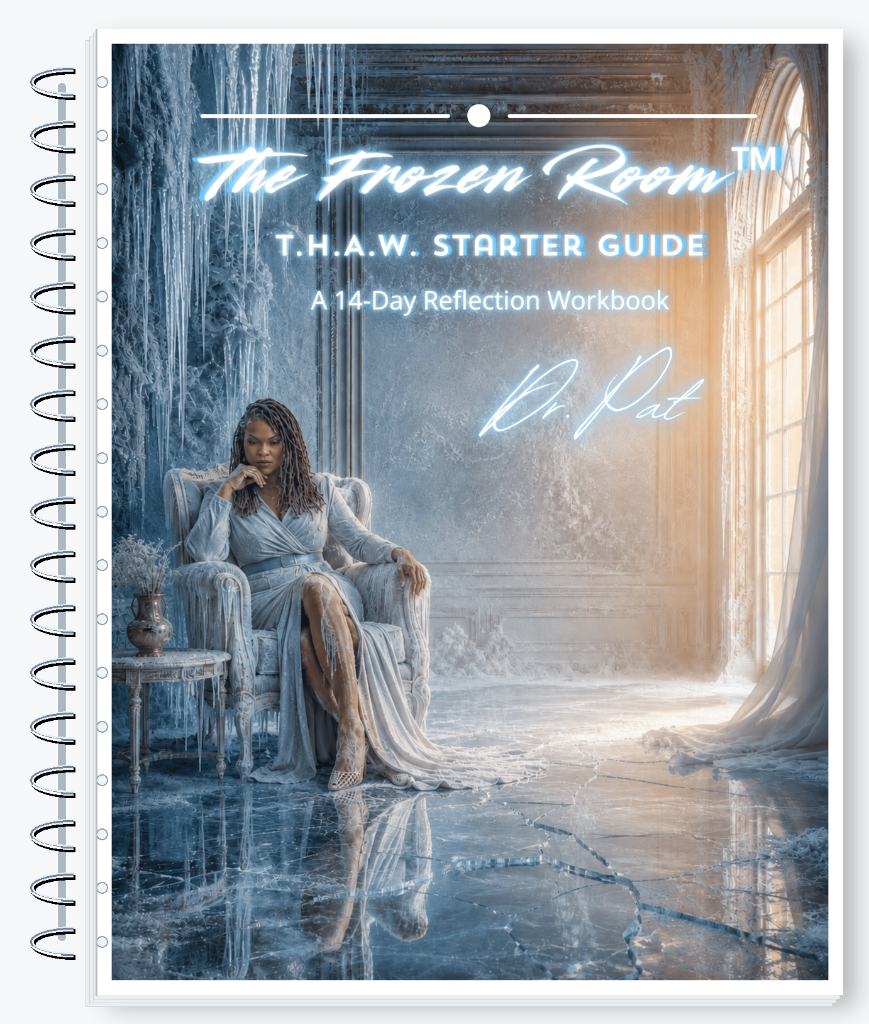
The T.H.A.W.
Starter Guide
The framework in your hands. A 14-day reflection workbook built around the T.H.A.W. process — complete with guided prompts, worksheets, a New Evidence Tracker, and a Next Room Plan.